





NeedFrench
  • Home
  • Tips
  • Grammar
  • Vocabulary
  • Reading
  • Quiz
  • Questions
No Result
View All Result
NeedFrench
  • Home
  • Tips
  • Grammar
  • Vocabulary
  • Reading
  • Quiz
  • Questions
No Result
View All Result
NeedFrench
No Result
View All Result

5 ways to use “to meet” in French

in Vocabulary
0
30
SHARES
167
VIEWS
Share on FacebookShare on TwitterShare on PinterestShare on WhatsappShare on TelegramShare on Linkedin

Are you interested in learning French? It’s a beautiful language that can take you places, both literally and figuratively. In this blog post, we’ll explore 3 other ways to use “to meet” in French, to help you get by in any situation.

ways to use “to meet” in French
5 ways to use “to meet” in French

Table of Contents

Toggle
  • Do you know any other ways to use "to meet" in French?
  • GRAMMAIRE
  • CONTEXT

Do you know any other ways to use "to meet" in French?

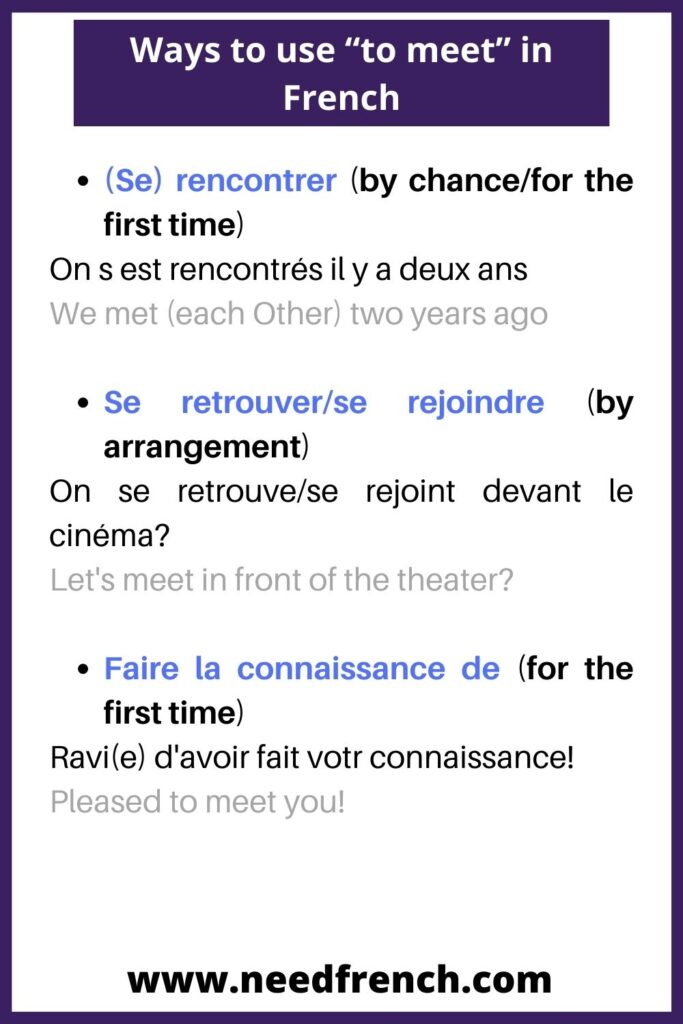
  • (Se) rencontrer (by chance/for the first time)
    On s est rencontrés il y a deux ans
    We met (each Other) two years ago

  • Se retrouver/se rejoindre (by arrangement)
    On se retrouve/se rejoint devant le cinéma?
    Let’s meet in front of the theater?

  • Faire la connaissance de (for the first time)
    Ravi(e) d’avoir fait votr connaissance!
    Pleased to meet you!

  • When encountering someone:
    J’ai rencontré ton voisin dans la rue ce matin.
    I met your neighbor in the street this morning.

  • When meeting again after a long time:
    Après toutes ces années on se retrouve enfin.
    After all these years we finally meet again.

GRAMMAIRE

Conjugaison du verbe “se rencontrer” (verbe pronominal) au passé composé:
Nous nous sommes rencontré(e)s: We met
Vous vous êtes rencontré(e)s: You met
Ils, elles se sont rencontré(e)s: They met


Conjugaison du verbe “se retrouver” (verbe pronominal) au passé composé:
Nous nous sommes retrouvé(e)s: We met
Vous vous êtes retrouvé(e)s: You met
Ils, elles se sont retrouvé(e)s: They met

CONTEXT

“Ravi(e) d’avoir fait votre connaissance” is used in a more formal context.
Informal would be: Content(e) d’avoir fait ta connaissance.

See also  14 Ways to Say Goodbye in French (With Pronunciation)
ShareTweetPin30SendShareShare

Related Posts

Express Your Feelings in French
Vocabulary

Learning to Express Your Feelings in French

9 ways to use the verb sortir in French
Vocabulary

9 ways to use the verb “sortir” in French

Ways to Say "how are you" in French
Vocabulary

Ways to Say “How Are You” in French

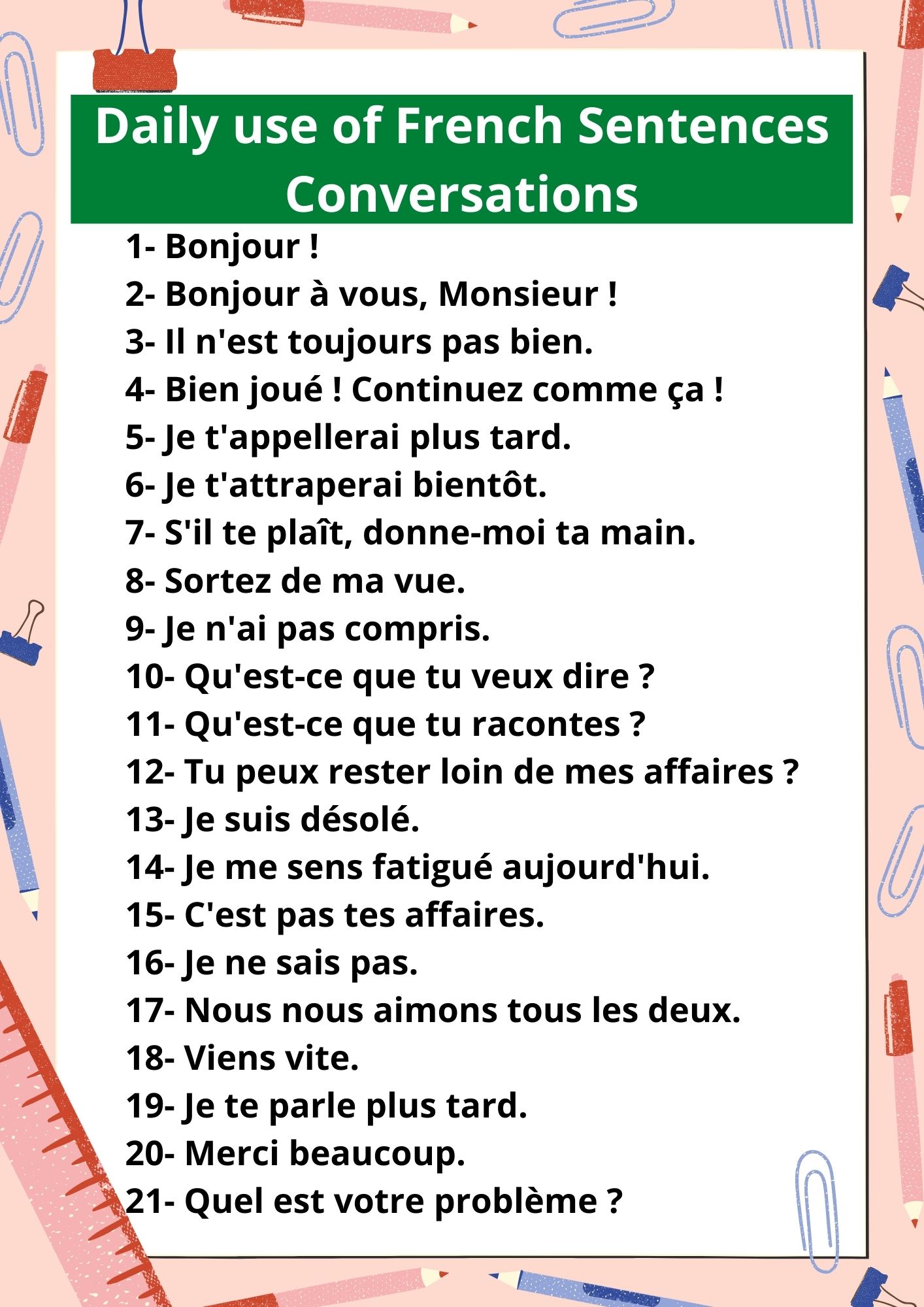
Daily use of French Sentences Conversations
Vocabulary

100+ Daily use French Sentences Conversations

Other ways to say “It’s easy” in French
Vocabulary

11 Other ways to say “It’s easy!” in French (C’est facile!)

How to React to Good News in French
Vocabulary

How to React to Good News in French

Next Post
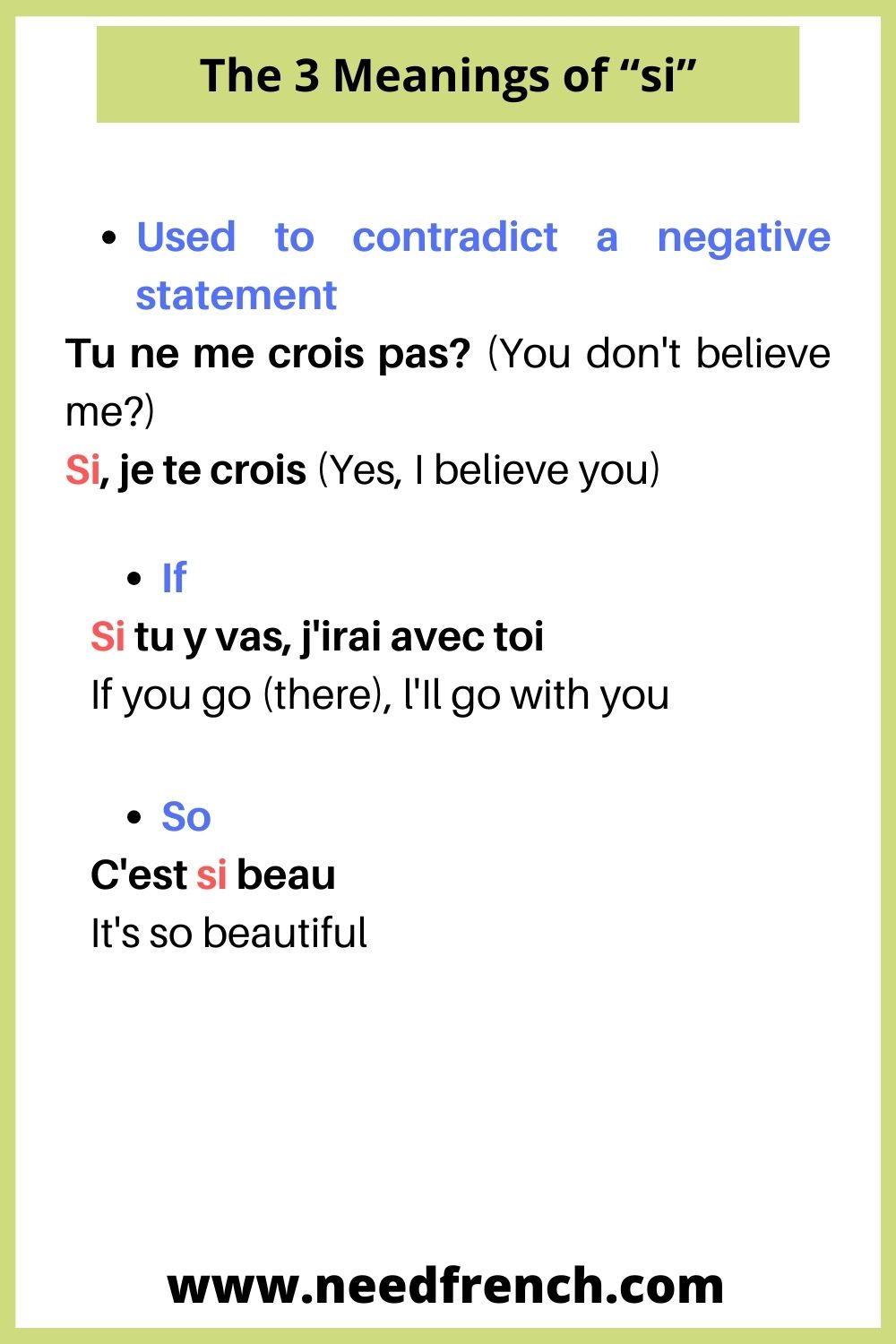
The 3 Meanings of “si”

The 3 Meanings of "si"

Today's Word être hors de soi

Today's Word : "être hors de soi"

Expression of the day avoir les yeux revolver

Expression of the day “Avoir les yeux revolver” in French

Leave a Reply Cancel reply

Your email address will not be published. Required fields are marked *


Follow us

Popular Posts

Understanding Regular and Irregular Verbs in French

Understanding Regular and Irregular Verbs in French

30 Ways to say it's delicious in French

30 Ways to say it’s delicious in French

102 Similar words in French and English

102 Similar words in French and English

12 Types of Coffee in France

12 Types of French Coffee

The Differences Between “Sain”, “Saint”, “Sein”, “Seing”,“Ceint”

The Differences Between “Sain”, “Saint”, “Sein”, “Seing”, and “Ceint”

The Difference Between “Bonne Chance” and “Bon Courage” in French

The Difference Between “Bonne Chance” and “Bon Courage” in French

  • Home
  • About us
  • Contact Us
  • Privacy Policy

© 2025 NeedFrench - Learn French online with free resources.

No Result
View All Result
  • Home
  • Tips
  • Grammar
  • Vocabulary
  • Reading
  • Quiz
  • Questions

© 2025 NeedFrench - Learn French online with free resources.