Learning how to express “cute” in French is a fun way to expand your vocabulary and sound more natural in conversations. French offers a range of expressions, from formal to very informal, each with its own charm. Whether you’re complimenting a friend’s pet, a baby, or a stylish outfit, this guide will help you choose the right phrase for any situation. Below, you’ll find six common ways to say “cute,” organized by formality, along with pronunciation tips, examples, and usage advice tailored for beginners.
Standard/Formal
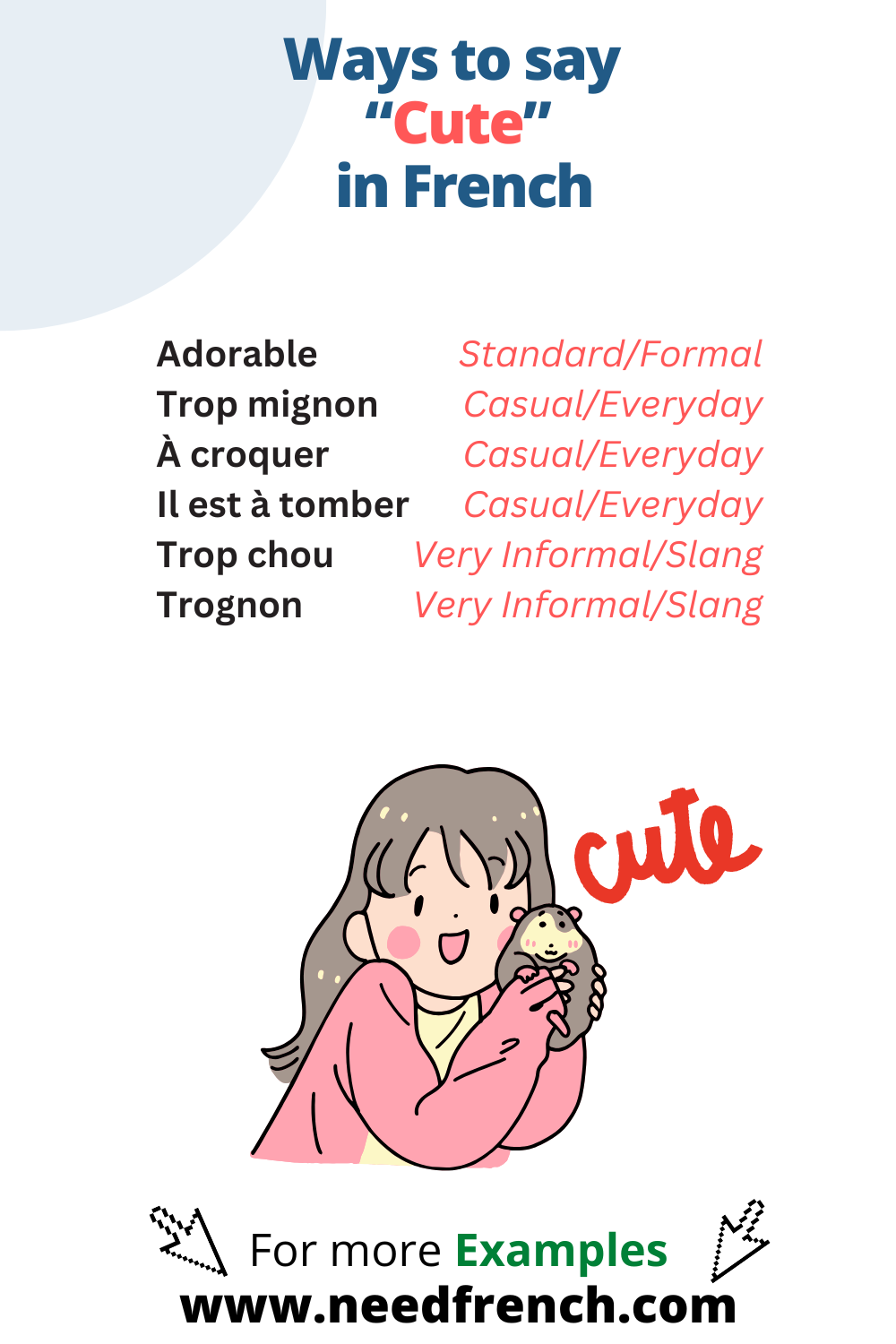
1. Adorable
Pronunciation: /adɔʁabl/ (ah-dor-ah-bluh)
Meaning: This is the most formal and proper way to say “cute” or “adorable.” It’s suitable for all situations, including polite or professional conversations.
When to Use: Use “adorable” when speaking to someone you don’t know well, in formal settings, or when you want to sound respectful.
Example: “Votre enfant est adorable.” (Your child is adorable.)
Casual/Everyday
2. Trop mignon
Pronunciation: /tʁo miɲɔ̃/ (troh mee-nyon)
Meaning: Meaning “too cute” or “so cute,” this is the most common everyday expression for “cute.” It’s friendly and versatile.
When to Use: Great for casual conversations with friends, family, or acquaintances. It’s the safest choice for most situations.
Example: “Ce chaton est trop mignon !” (This kitten is so cute!)
3. À croquer
Pronunciation: /a kʁoke/ (ah kro-kay)
Meaning: Literally “good enough to eat,” this phrase conveys that something is irresistibly cute. It has a warm, affectionate tone.
When to Use: Use it in casual, friendly settings when you want to express extra enthusiasm.
Example: “Ce bébé est à croquer !” (This baby is adorably cute!)
Meaning: This modern expression means “to die for” and can describe something or someone as cute or stunning.
When to Use: Suitable for casual contexts, especially when complimenting style or appearance.
Example: “Son nouveau look est à tomber !” (His/her new look is to die for!)
Very Informal/Slang
5. Trop chou
Pronunciation: /tʁo ʃu/ (troh shoo)
Meaning: Literally “too cabbage,” this quirky phrase is a playful way to say “super cute.” It’s a term of endearment.
When to Use: Best for very informal situations, like with close friends or young people.
Example: “Ton petit frère est trop chou !” (Your little brother is super cute!)
6. Trognon
Pronunciation: /tʁɔɲɔ̃/ (tro-nyon)
Meaning: Another fun, casual expression for “cute,” often used to describe something small and adorable.
When to Use: Perfect for friendly, relaxed settings—think of it as a step beyond “trop chou.”
Example: “Regarde ce bébé, il est trognon !” (Look at this baby, it’s so cute!)
Usage Tips
Formal Situations: Stick with “adorable,” especially when using the polite “vous” form (e.g., “Votre chien est adorable” – Your dog is adorable).
Casual Settings: “Trop mignon” is your go-to for most informal chats. For extra flair with close friends, try “trop chou” or “trognon.”
Context Matters: Use formal expressions with people you don’t know well, and save the slang for buddies or family.
Enthusiasm is Welcome: French speakers often amp up their expressions, so feel free to add “trop” (very) or “tellement” (so) for emphasis (e.g., “Tellement mignon !” – So cute!).