Want to sound more French? Let’s move beyond ‘très’ (very). There are many words that can make your French more colorful and precise. We’ll show you how!
Why Avoid ‘Très’?
- Variety: Constantly using ‘très‘ can make your speech monotonous.
- Precision: Alternatives to ‘très‘ often better describe what you want to express.
- Sophistication: A varied vocabulary demonstrates better language mastery.
Examples to Enrich Your Vocabulary
Emotions and States:
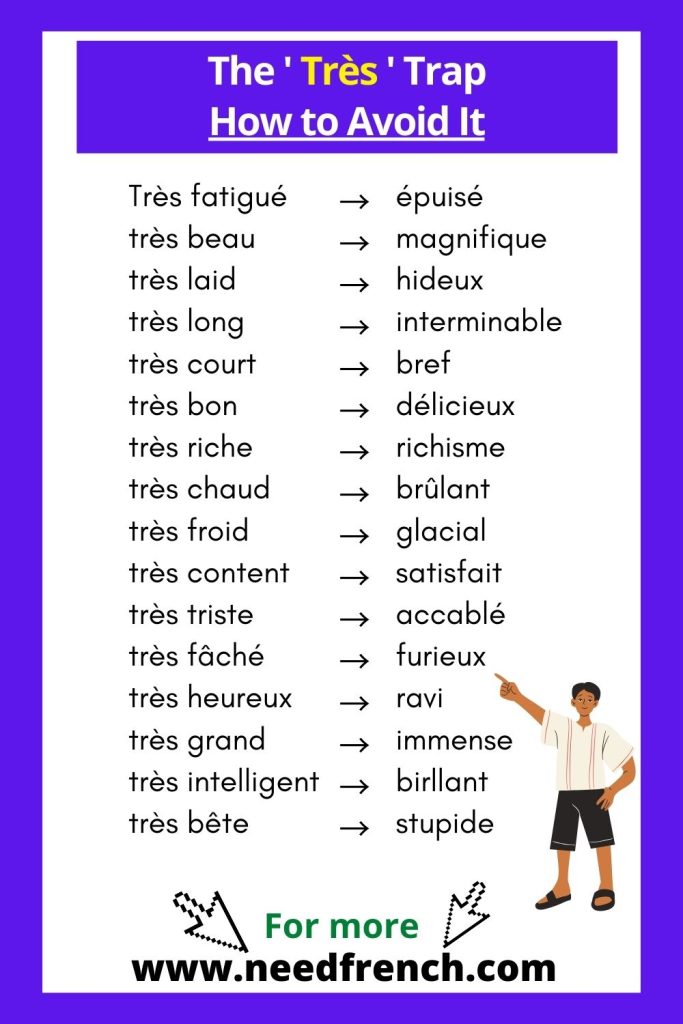
- Très fatigué (very tired) → épuisé, exténué, lessivé, éreinté, vidé
- Très content (very happy) → satisfait, ravi, enchanté, comblé, aux anges
- Très triste (very sad) → accablé, désolé, abattu, affligé, inconsolable
- Très fâché (very angry) → furieux, enragé, hors de lui, écumant de rage, enflammé
Appearance and Cleanliness:
- Très beau (very beautiful) → magnifique, splendide, somptueux, éblouissant, ravissant
- Très laid (very ugly) → hideux, repoussant, affreux, disgracieux, moche
- Très propre (very clean) → impeccable, immaculé, étincelant, irréprochable
- Très sale (very dirty) → crasseux, dégoûtant, immonde, répugnant, sordide
Size and Duration:
- Très grand (very big) → immense, gigantesque, colossal, démesuré, titanesque
- Très petit (very small) → microscopique, minuscule, infime, lilliputien, infinitésimal
- Très long (very long) → interminable, sans fin, inépuisable, infini
- Très court (very short) → bref, succinct, concis, laconique, expéditif
Quality and Taste:
- Très bon (very good) → délicieux, savoureux, exquis, succulent, délectable
- Très mauvais (very bad) → infect, abominable, détestable, immangeable
Wealth and Poverty:
- Très riche (very rich) → richissime, opulent, fortuné, fastueux, nanti
- Très pauvre (very poor) → indigent, misérable, nécessiteux, démuni, déshérité
Temperature:
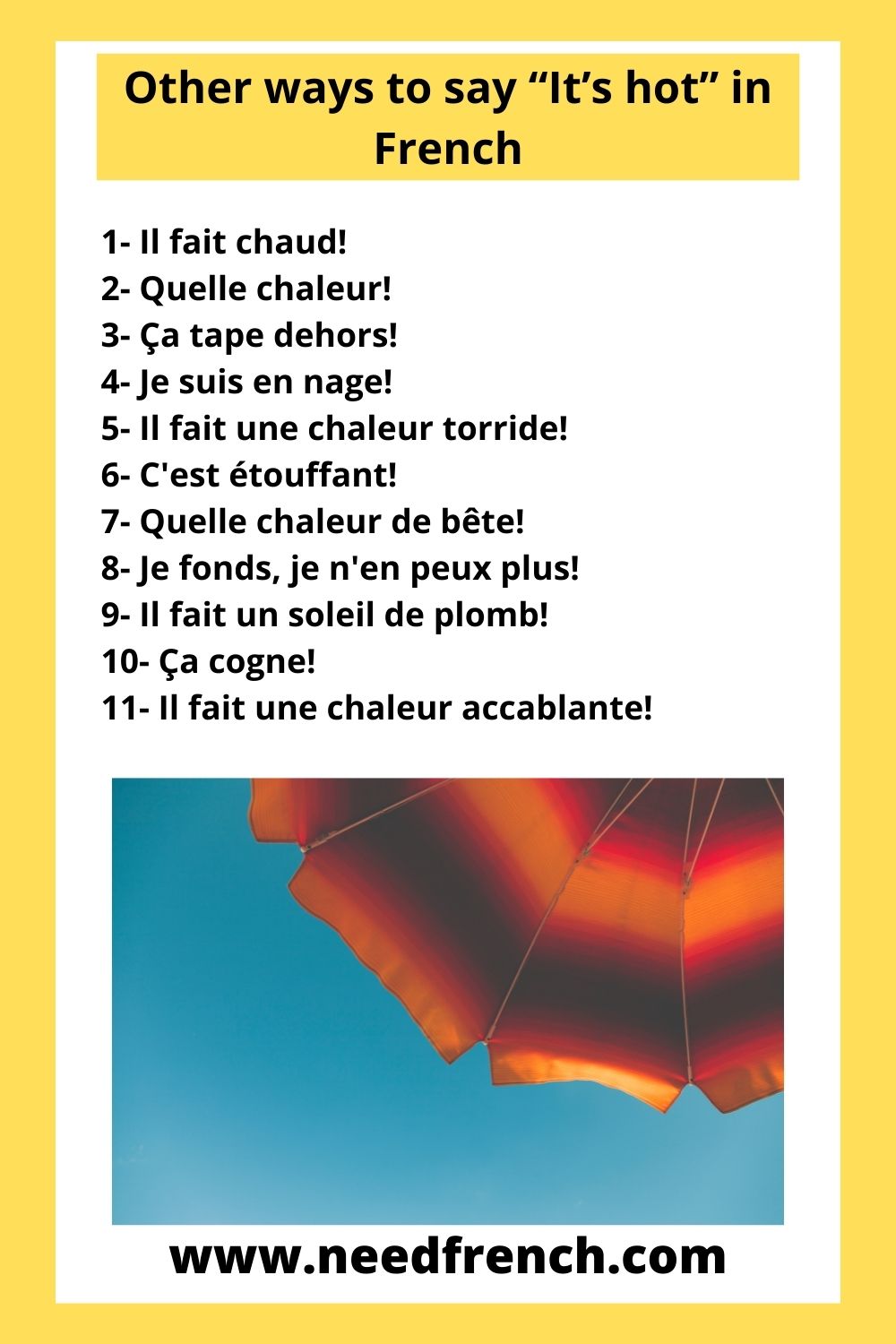
- Très chaud (very hot) → brûlant, torride, étouffant, incandescent, ardent
- Très froid (very cold) → glacial, sibérien, polaire, glaçant, glacé
Speed and Attention:
- Très rapide (very fast) → prompt, foudroyant, fulgurant, éclair, instantané
- Très attentif (very attentive) → concentré, absorbé, captivé, focalisé, assidu
Personal Qualities:
- Très courageux (very brave) → intrépide, vaillant, audacieux, téméraire, héroïque
- Très modeste (very modest) → chaste, humble, discret, effacé, réservé
- Très timide (very shy) → timoré, gêné, renfermé, effacé, intimidé
- Très bavard (very talkative) → parleur, loquace, prolixe, intarissable, verbeux
Age and Experience:
- Très jeune (very young) → novice, débutant, inexpérimenté, primaire, puéril
- Très vieux (very old) → suranné, désuet, antique, archaïque, vétuste
Price and Value:
- Très cher (very expensive) → exorbitant, hors de prix, prohibitif, scandaleux
Character Traits:
- Très sincère (very sincere) → véridique, authentique, franc, loyal, candide
- Très fort (very strong) → tenace, robuste, solide, résistant, inébranlable
- Très faible (very weak) → vulnérable, fragile, chétif, débile, sans force
- Très gentil (very kind) → amène, bienveillant, aimable, affable, prévenant
- Très calme (very calm) → serein, paisible, tranquille, posé, imperturbable
- Très intelligent (very smart) → brillant, génial, doué, érudit, sagace
- Très bête (very stupid) → stupide, idiot, sot, imbécile, benêt
By expanding your vocabulary beyond simple ‘très‘, you open the door to richer and more nuanced expression in French. Not only will this make your French more sophisticated, but it will also allow you to better communicate your thoughts and emotions. So, the next time you’re tempted to use ‘très‘, pause and ask yourself if there might be a more precise and eloquent word to express your idea.