Expressing enthusiasm and appreciation is an important part of speaking French naturally. From formal admiration to trendy slang, French offers many colorful ways to say “I love it” in different contexts
Table of Contents
ToggleExpressions by Formality Level
Formal/Standard
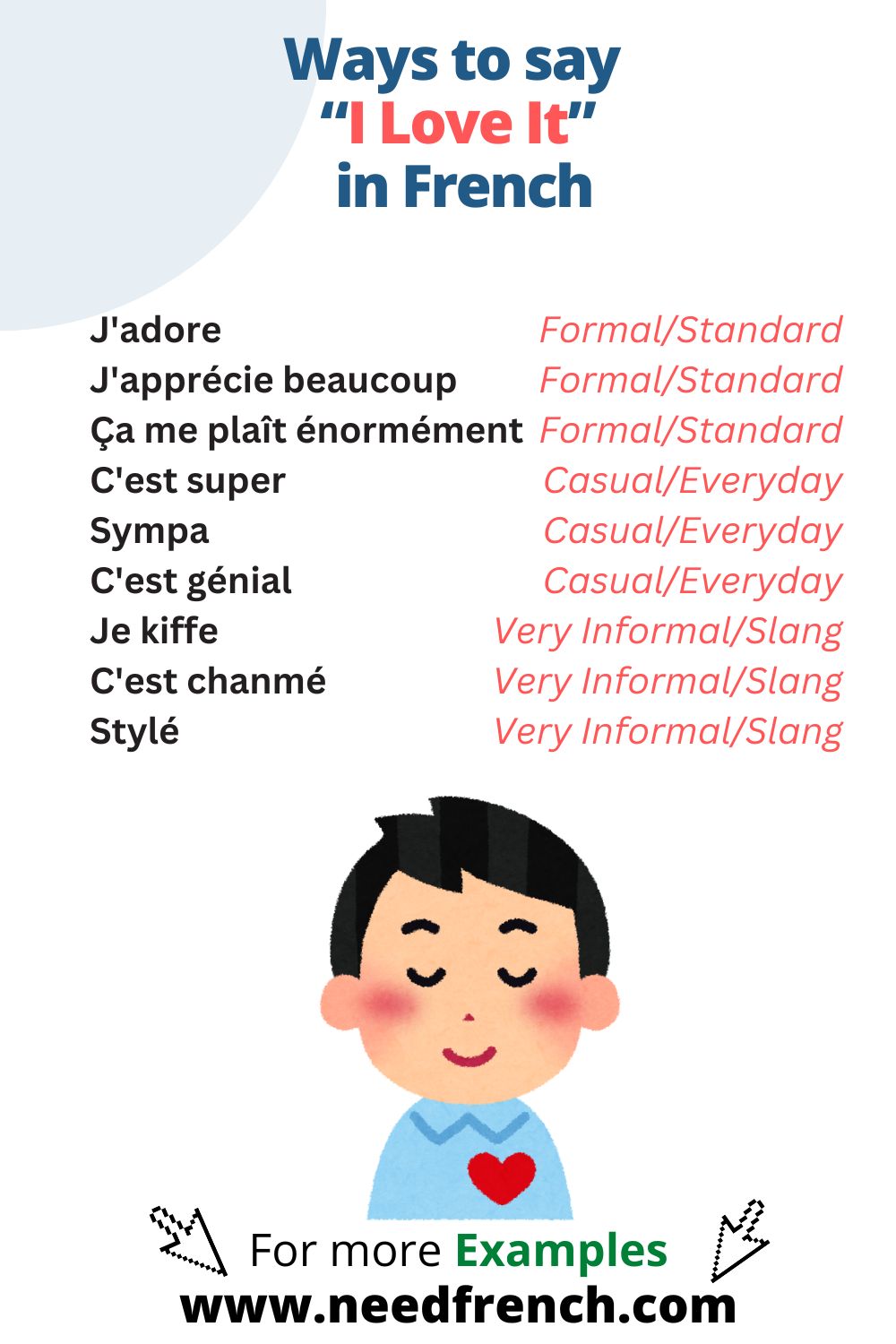
1. J’adore
Pronunciation: /ʒadɔʁ/ (zhah-dor)
- The most standard way to say “I love it”
- Appropriate in all contexts and situations
- Example: “J’adore cette exposition d’art.” (I love this art exhibition.)
2. J’apprécie beaucoup
Pronunciation: /ʒapʁesi boku/ (zhah-pray-see boh-koo)
- More formal, means “I appreciate it a lot”
- Great for professional settings
- Example: “J’apprécie beaucoup votre proposition.” (I really appreciate your proposal.)
3. Ça me plaît énormément
Pronunciation: /sa mə plɛ enɔʁmemɑ̃/ (sah muh play ay-nor-may-mahn)
- Formal but warm, means “I like it enormously”
- Good for expressing genuine appreciation
- Example: “Ce design me plaît énormément.” (I really love this design.)
Casual/Everyday
4. C’est super
Pronunciation: /sɛ sypɛʁ/ (say sue-pair)
- Common everyday expression
- Versatile and widely understood
- Example: “C’est super, ton idée !” (Your idea is great!)
5. Sympa
Pronunciation: /sɛ̃pa/ (sam-pah)
- Short for “sympathique”
- Casual approval, means “nice” or “cool”
- Example: “Ton nouveau sac est sympa !” (Your new bag is cool!)
6. C’est génial
Pronunciation: /sɛ ʒenjal/ (say zhay-nee-al)
- Enthusiastic approval
- Means “It’s awesome”
- Example: “Ce film était génial !” (This movie was awesome!)
Very Informal/Slang
7. Je kiffe
Pronunciation: /ʒə kif/ (zhuh keef)
- Very casual slang, from Arabic
- Popular among younger people
- Example: “Je kiffe trop ta nouvelle coiffure !” (I really dig your new haircut!)
8. C’est chanmé
Pronunciation: /sɛ ʃɑ̃me/ (say shan-may)
- Verlan slang (reversed syllables of “méchant”)
- Very informal, urban youth language
- Example: “Son concert était chanmé !” (His/her concert was awesome!)
9. Stylé
Pronunciation: /stile/ (stee-lay)
- Very casual, means “stylish” but used as “cool”
- Popular among teens and young adults
- Example: “Ton appart est trop stylé !” (Your apartment is so cool!)
Additional Expressions
- C’est top – Very casual, “It’s great”
- C’est de la bombe – Very informal, “It’s the bomb”
- Ça déchire – Very informal, “It rocks”
- C’est trop bien – Casual, “It’s so good”
- Je suis fan – Casual, “I’m a fan”
- Ça me botte – Informal, “I dig it”
- C’est nickel – Casual, “It’s perfect”
Usage Tips
When to Use Each Expression:
- Professional/Formal Settings:
- J’adore
- J’apprécie beaucoup
- Ça me plaît énormément
- Everyday Situations:
- C’est super
- C’est génial
- Sympa
- With Friends/Young People:
- Je kiffe
- C’est chanmé
- Stylé
Example Dialogues
Formal:
A: “Qu’avez-vous pensé de notre présentation ?”
B: “J’apprécie beaucoup votre approche innovante.”
Casual:
A: “J’ai préparé un gâteau pour ton anniversaire.”
B: “C’est génial, merci beaucoup !”
Very Informal:
A: “Tu as vu ma nouvelle moto ?”
B: “Elle est trop stylée ! Je kiffe grave !”
Remember: When in doubt, “J’adore” works in almost any situation and is understood by speakers of all ages!